 Autoren-Archiv: AIXhibit
How to transport your bikes with bike carriers
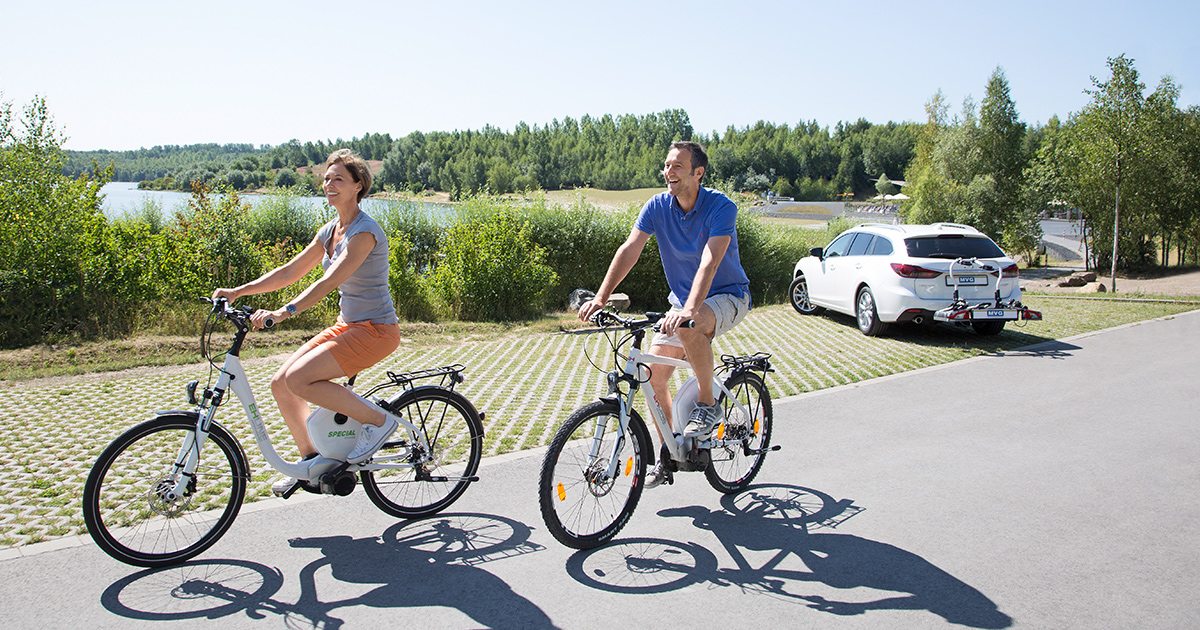 There are a number of things to consider when riding with bike carriers, which is why we have put together the most important information for you so that you can not only transport your bikes comfortably with your vehicle, but also safely and correctly.
The bicycle has become an important part of our society. Many use the two-wheelers for short distances to escape the heavy city traffic and to get faster from A to B. For some, cycling is the most popular sport and furthermore it is often used for longer distances. With the beginning of spring, there is of course the opportunity for a bike tour on vacation or short break. But before you can get started, you should first clarify which type of bike carrier is suitable for your car, because not every model can be mounted on every vehicle.
Roof carrier
With a wheel track for the roof rack, you can transport up to four or, depending on the space, more bicycles on the vehicle roof. You can attach and remove the roof rack at any time by yourself on the vehicle roof – usually it is attached to the roof rack. Note that you have to lift the bikes up and down on the roof of the vehicle. The additional cargo on the roof shifts the center of gravity of your vehicle upwards, offers greater air resistance and is more susceptible to cross winds.
Rear bike carrier
One of the most practical possibilities of transportation are rear bike carriers, which are easy to install on the vehicle without much effort. For a rear bike rack you need a trailer hitch, the carrier is then attached to the head of the trailer hitch. When loading the carrier, you should always observe the permissible guidelines for your vehicle and the rear bicycle carrier. In our shop you will find the right rear bike carriers in various designs for up to four bicycles.
You should consider…
When driving with a rear bike carrier, get off the gas. ADAC recommends a top speed of 120 km / h. If the carrier or the bicycles attached to it hide the vehicle’s lights, you should definitely purchase a rear bike carrier that has taillights itself. Alternatively, you can attach additional brake lights to the rack so that you remain visible. If the vehicle’s lights are covered, you must expect a fine of € 20. In some cases, racks and / or bicycles can also hide the license plate, in this case you will need to get a second license plate and attach it to your bike rack. Anyone who cannot show a visible license plate at a police check must expect a fine of € 60. Movable objects such as bicycle baskets or child seats should be stowed inside the vehicle to minimize the safety risk while driving.
The Easter holidays in Germany will start in a few weeks and if you are planning a bike tour on the way, you should inform yourself beforehand about the country-specific features of the destination. The same applies to transit countries and places. As in Austria, a special license plate on the bike carrier is mandatory in Italy and Spain, for example.
In our shop we offer you various rear cycle carriers, just have a look!
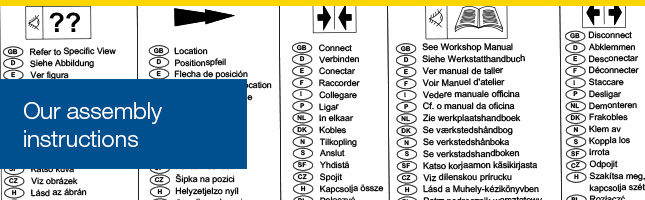 For the attachment of your trailer hitch or also with the electrical kit we are always sending you an assembly instruction. These instructions explain, how your AHK and / or electrical kit must be put into operation. To help you understand we use pictograms to explain steps or comments, which repeatedly appear in the instructions. In the following paragraphs we are explaining the signs und pictures to you.
 An old familiar, even from other areas, is probably the warning. We use a triangle with an exclamation point in it to alert you to the need for extra care and careful attention.
 You will always see two arrows pointing towards each other in our assembly instructions. These are used when you need to connect or disconnect something. This is especially common in electrical kits when your cable needs to be connected.
 Besides, you will also find a trashcan that tells you that you can dispose something. You may also find this sometimes with the electric sets.
 In addition to the deburrer and the file, a drawing with two persons carrying something is also important when attaching the trailer hitch in accordance to the instruction manual. This pictogram indicates that you should work in pairs, for example when removing the rear apron. This is much easier for two, with fewer accidents happening at the same time.
 If you have to protect something against corrosion, we noted a small bucket in the assembly instructions for you. If something needs to be cleaned, you will see two hands with a rag and a bottle labeled „Cleaner“. You can then apply both to the appropriate place.
 illustration „, the book represents the workshop manual and refers you to this.
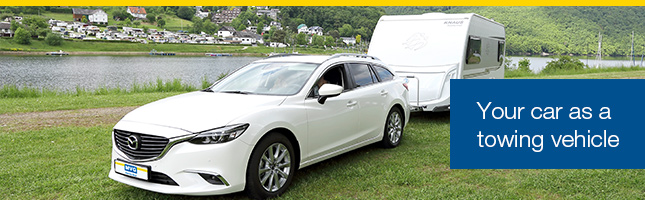 Of course, before you retrofit a trailer hitch, you first have to determine whether your car has ever been designed to travel with the trailer and is approved as a towing vehicle. You can find all the information you need on the nameplate of the vehicle. The data are both in the service booklet and usually on a sticker that is housed in the spare wheel module. If it can not be found there, you will find information in the owner’s manual of the vehicle on where to findyour nameplate. In addition to the vehicle manufacturer and the approval number, the chassis number can also be found there. The second line also specifies technically permissible weights. Underneath you will also find the permissible trailer weight.
 In Germany there are many different license classes, among these are also some that regulate and influence driving with a trailer. We had a look at the different licenses and summarized the key data for you. A distinction is made between the driving license class 3, class B, class B96 and class BE.
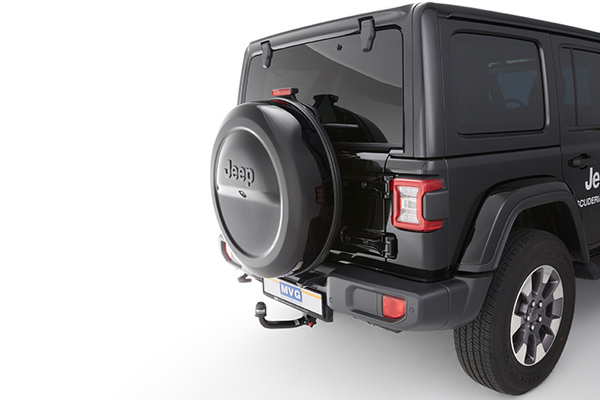
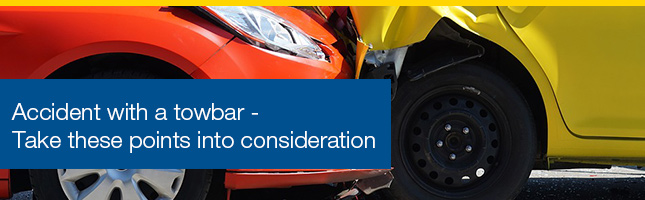 In an accident, there are many points that shoot through your head and that you have to pay attention to. The trailer hitch (maybe) does not always come to mind at first. Of course, driving yourself in or against the front of the car will obviously not affect the towbar, although it will certainly damage other areas of the vehicle. Thus, you will have to worry about the trailer hitch when the rear of the vehicle is affected in the accident. So if somebody drives into the back of your car or if you drive too far when parking and end up in the wall, then you should always think about your trailer hitch and question whether it can still be used.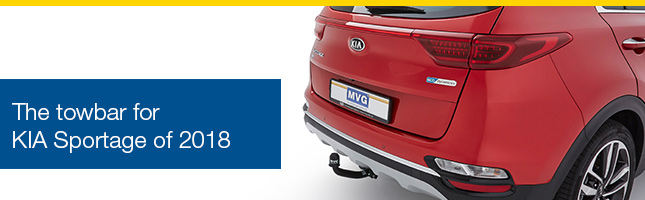
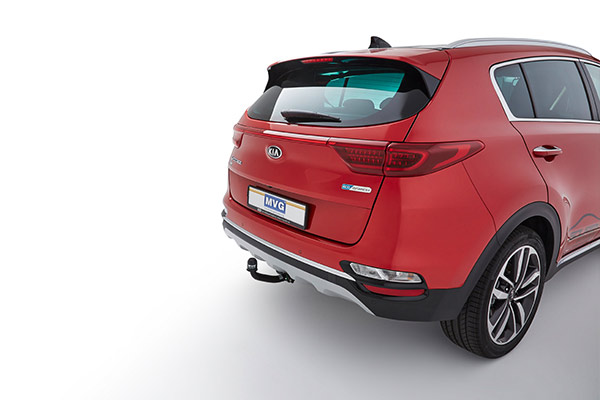
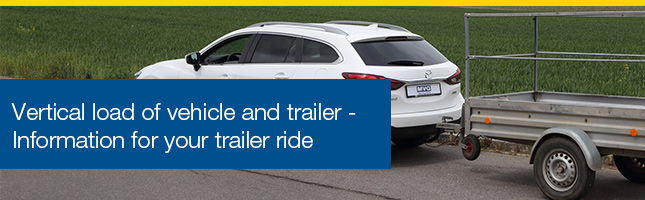 A higher vertical load with the towbar than with the vehicle will be the case most of the time. The trailer hitch can usually withstand higher loads than the towing vehicle. Towbars made by MVG are tested for fatigue strength according to the European Directives 94/20 / EC, ECE R55 or Carlos TC. In addition, the towing hitches are always tested for maximum D values and towing loads, so it can certainly come about that the hitch is approved for higher values than a vehicle.